Disciplinary and Reward Procedures Report
Discipline and Reward Procedures Report is a report generally prepared to systematically record, analyze and present to the management the processes, decisions and results regarding the disciplinary punishments and rewards given by an institution or company to its employees. The Disciplinary and Reward Procedures Report not only lists the penalties; It is also a strategic HR tool that forms the basis of creating a fair, motivating and high-performance workplace culture.
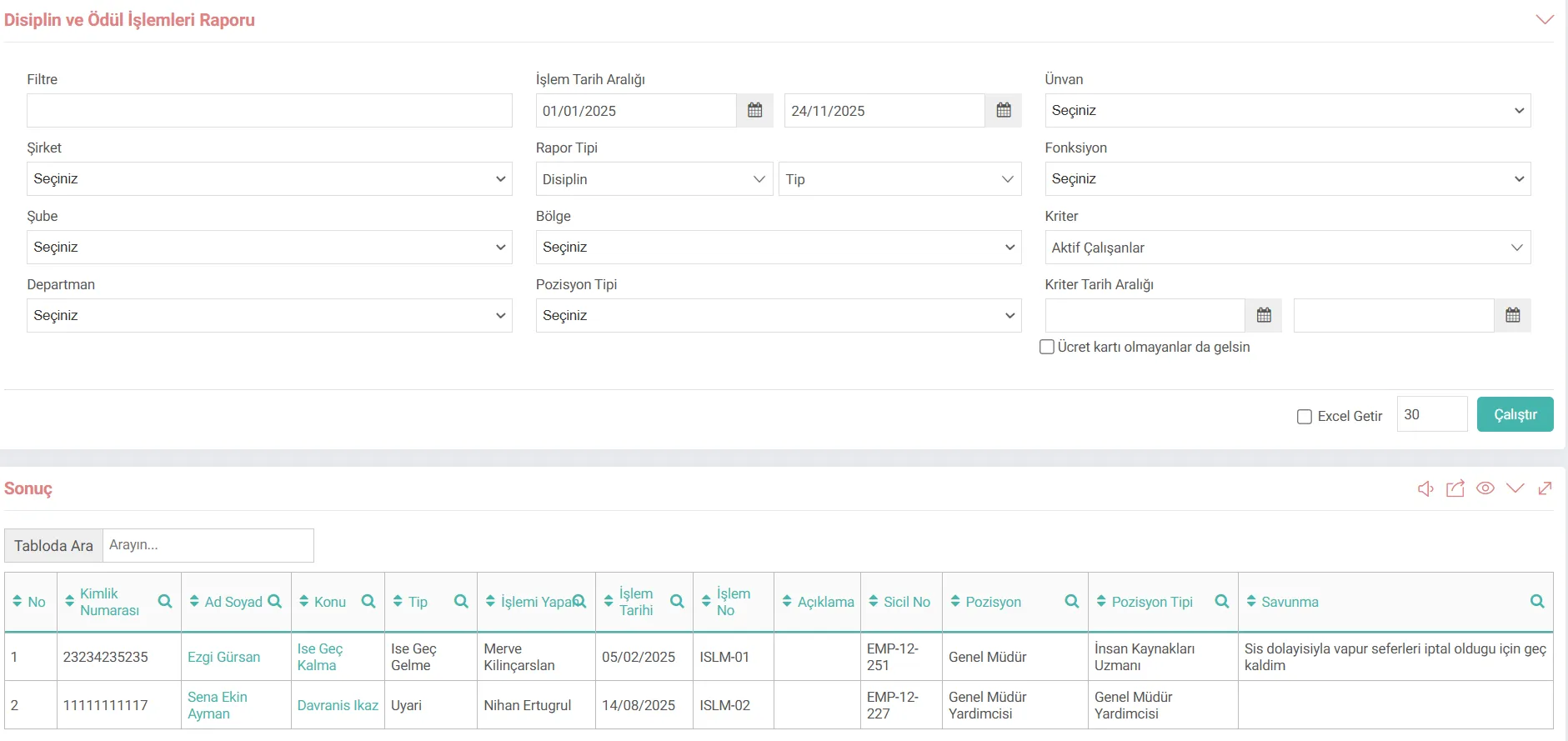
Path:BI-Report > Standard Reports > HR - HR Reports > Disciplinary and Other Actions
Warnings can be given to employees on the Disciplinary Actions page on the HR side. These warnings can only be in the form of warnings, or a fee deduction may optionally be applied. Or various rewards can be given to motivate the employee, such as bonuses, gift certificates, etc. In this way, the report of the disciplinary and reward transactions can be received collectively with filter options. Report types are divided into two: Discipline and Reward. Therefore, it is taken separately according to the report type.
There are two selections in the report: transaction date range and criterion date range. The transaction date range is based on the date the transaction was made. In the criteria field, there are selections such as active employees, entries and exits. This selection is based on the date. For example, if an output selection is made in the criterion field and the selection is made in the criterion date range, it gives the report accordingly. In this way, a separate report is made about the dismissed employee.
Benefits of the Report
- Performance and Motivation Management
- High Performance Encouragement: By showing the effectiveness of the reward mechanism, it helps motivate employees to show higher performance. Employees know that their efforts are noticed and rewarded.
- Participation and Loyalty: A fair and consistent reward system increases employees' commitment (loyalty) to the organization and their involvement in the job.
- High Performance Encouragement: By showing the effectiveness of the reward mechanism, it helps motivate employees to show higher performance. Employees know that their efforts are noticed and rewarded.
- Ensuring Rule and Order
- Consistency and Fairness: The report reveals whether similar disciplinary penalties are given for similar violations, ensuring consistency and fairness in disciplinary practices. allows to be. This increases trust among employees.
- Risk and Compliance: By analyzing which types of rule violations occur more frequently, it identifies areas where management policies, training or business processes need to be reviewed. Thus, it helps reduce legal risks.
- Consistency and Fairness: The report reveals whether similar disciplinary penalties are given for similar violations, ensuring consistency and fairness in disciplinary practices. allows to be. This increases trust among employees.
- Strategic Decision Making
- Trend Analysis: It shows the reasons, frequency and distribution of disciplinary incidents on a departmental basis. These analyzes play a strategic role in identifying key problems (such as lack of training, poor management, excess workload).
- Human Resources Planning: By seeing which employees/departments are consistently rewarded or disciplined, it enables more informed decisions to be made regarding talent management, promotion decisions and training needs.
- Trend Analysis: It shows the reasons, frequency and distribution of disciplinary incidents on a departmental basis. These analyzes play a strategic role in identifying key problems (such as lack of training, poor management, excess workload).
- Employee Development
- Feedback Tool: Both reward and discipline. Records provide a basis for managers to give concrete feedback to employees about what they are doing well or what they need to improve.
[12 7]
[142 ]
[157 ]
[10 ][ 188]